

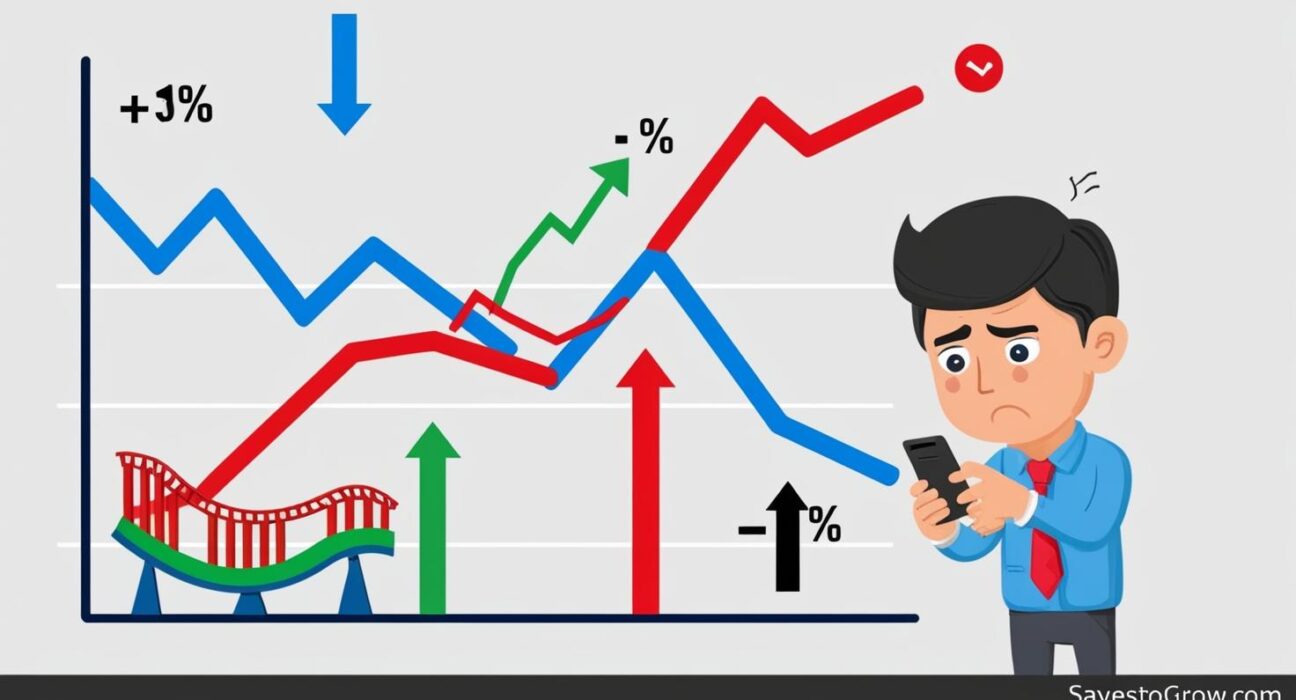
Introduction: The Stock Market Roller Coaster
Imagine two stocks:
- Stock A: Moves between ₹100 and ₹105 all week.
- Stock B: Jumps from ₹100 to ₹150, then crashes to ₹80 the next day.
Stock B is volatile—its price swings wildly. But what causes this? Should you avoid volatile stocks? Let’s break it down.
What Is Volatility?
Volatility = How much a stock’s price fluctuates over time.
- High Volatility → Big, unpredictable price swings (e.g., small-cap stocks).
- Low Volatility → Steady, gradual movements (e.g., blue-chip stocks).
Example:
| Stock | Price Today | Price Next Week | Volatility |
|---|---|---|---|
| Reliance | ₹2,800 | ₹2,820 | Low |
| Suzlon | ₹35 | ₹50 (then ₹25) | High |
Why Do Stocks Become Volatile?
1. Company-Specific News
- Earnings reports, scandals, leadership changes.
- Example: If Tata Motors misses profit targets, its stock may drop 10% in a day.
2. Economic Factors
- Interest rates, inflation, GDP growth.
- Example: If RBI hikes rates, bank stocks may swing sharply.
3. Global Events
- Wars, oil prices, US Fed decisions.
- Example: Russia-Ukraine war caused global market chaos in 2022.
4. Speculation & Hype
- Retail investors piling into “trending” stocks (e.g., meme stocks).
How Is Volatility Measured?
1. Beta (β)
- Compares a stock’s volatility to the market (Nifty/Sensex).
- Beta = 1 → Moves with the market.
- Beta > 1 → More volatile (e.g., Adani stocks).
- Beta < 1 → Less volatile (e.g., HUL).
2. Standard Deviation
- Stats term for how much a stock’s returns vary from its average.
- *Higher deviation = Higher risk.*
3. VIX (Fear Index)
- Measures expected market volatility (called the “fear gauge”).
Is Volatility Good or Bad?
👍 Pros:
- Short-term traders can profit from price swings.
- Opportunity to buy low during panic sell-offs.
👎 Cons:
- Stressful for long-term investors.
- Hard to predict (can lead to big losses).
Who Should Care?
✔ Traders → Love volatility (quick profits).
✔ Long-term investors → Can ignore short-term noise.
How to Manage Volatility?
- Diversify → Mix stable (large-cap) & volatile (small-cap) stocks.
- Avoid Panic Selling → Stick to your plan.
- Use Stop-Loss → Automatically sell if a stock crashes.
- Invest in Index Funds → Less volatile than individual stocks.
Famous Examples of Volatility
- Yes Bank (2020) → Crashed 90% in weeks, then rebounded.
- Adani Stocks (2023) → Hindenburg report caused wild swings.
- GameStop (US, 2021) → Reddit traders made it spike 1,500%.
Final Takeaways
✔ Volatility = Price swings (measured by Beta, VIX).
✔ Caused by news, economics, or hype.
✔ Not always bad—can create opportunities.
✔ Manage risk with diversification & discipline.

Prashant Thakur is the founder of SavesToGrow.com. He is not a financial advisor — he's a self-taught personal-finance enthusiast who learned to budget, save consistently, and invest from scratch, and now shares those hard-won lessons in plain, jargon-free English. Every guide is researched from primary sources such as the Income Tax Department, SEBI, RBI and AMFI, and reflects real, first-hand experience. Nothing on this site is professional financial advice — always do your own research or consult a SEBI-registered advisor before making money decisions.


